

Our Approach
About Cliffside Malibu
Cliffside Malibu employs a three-fold approach to addiction treatment that creates the foundation for lasting recovery.
First, we employ intensive one-on-one psychotherapy using the Stages of Change model. Second, we complement intensive therapy with carefully chosen, evidence-based holistic treatments. Third, we employ the first two tools together to create changes in the brain consistent with the ways neuroscience research suggests addiction can be overcome. Together, this treatment protocol is synergistic, creating treatment outcomes that are more effective than any individual part on its own.

Our Approach
Our Model
Stages Of Change
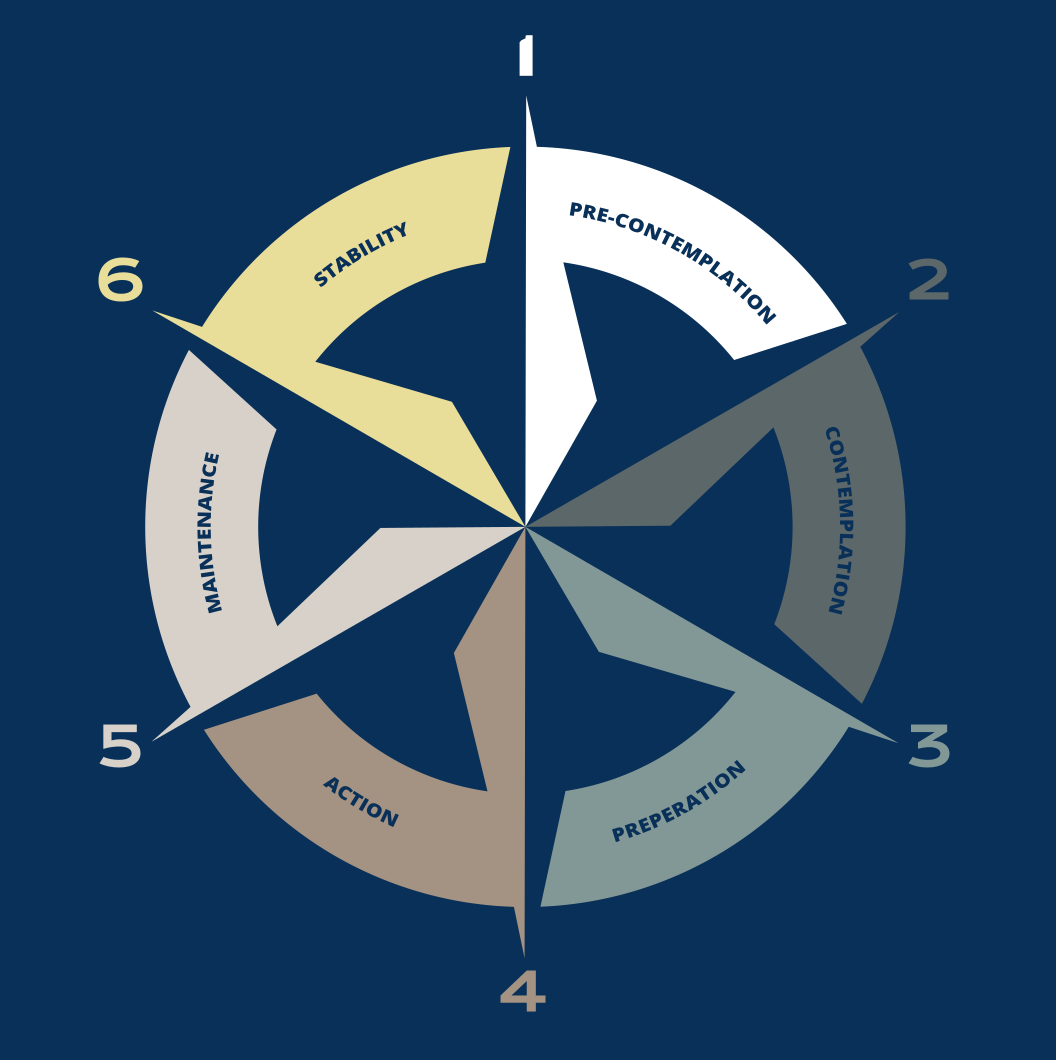
The foundation of our treatment protocol is intensive one-on-one psychotherapy using the Stages of Change model. The Stages of Change model was created by one of the world’s leading psychologists, Dr. James Prochaska from the University of Rhode Island and his colleagues. Dr. Prochaska has endorsed our treatment protocol as described in the #1 bestselling book Ending Addiction for Good, the only time he has ever endorsed the use of his groundbreaking model for addiction treatment.
The Stages of Change model suggests that change happens in a predictable pattern, with a set of different obstacles that can frequently present at each stage of the change process. Using this model, we are able to meet individuals at their individual level of readiness to change and, when difficulties arise that might supplant change, we can help our clients overcome them.
The Stages of Change model is “transtheoretical.” That means that no single type of psychotherapy is considered superior to another. Rather, psychotherapeutic interventions are taken from a variety of schools of thought, depending on what an individual client needs at any particular time. We have had particularly good results using EMDR, Dialogical Behavioral Therapy (DBT), Cognitive Behavioral Therapy (CBT), and Motivational Interviewing though this list is by no means exhaustive of the types of psychotherapy employed in our program. We also emphasize something called “Positive Psychology” – a school of thought that emphasizes all that is creative and uplifting within a person rather than focusing on clinical pathologies.
Walking Alongside You in Recovery
Complementary Whole-Health Therapies
In addition to intensive psychotherapy, we use a host of additional therapeutic tools to help our clients heal on the levels of mind, body, and spirit. We involve our clients in everything from journaling to acupuncture to hiking on our trails. We do this to invigorate the body and enliven the spirit. All aspects of an individual must heal for recovery to become a way of life. If the body is sick or weak, the psychological work will be more difficult than it needs to be, because the person is distracted by ill health. If the spirit is suffering, it will pull against the physical and emotional health that is being restored. Addicts are individuals, whole people who must be addressed that way. We do not treat symptoms but look at the systems that created a pathway to addiction. Proven practices such as yoga, meditation, and proper nutrition help our clients heal holistically and fully.
Our Approach
Personalized Care
Individualized Treatment Plans
Stories of Success
What Our Patients Are Saying About Cliffside Malibu
A Look Inside and Out
Family Involvement
Confidential Insurance Verification
Accepting Most Major Insurance Plans









Your Recovery Starts Here
Take the First Step in the Most Important Journey of Your Life
Call now to speak confidentially with an admission counselor.